


POSITIVE FOR THE ENVIRONMENT
Our work plays a key role in creating and improving assets that protect and enhance the natural environment. Drawing on expertise built in the regulated water sector, we support clients including the Canal & River Trust, Environment Agency and the Mining Remediation Authority with projects that strengthen climate resilience, safeguard habitats and improve water quality.
We continue to expand our capability in delivering innovative nature‑based solutions - from constructed wetlands to sustainable drainage systems - bringing modern, low‑carbon approaches to traditional engineering challenges. Much of our work with water clients is directly driven by environmental outcomes too, whether that’s upgrading assets to meet modern ecological standards or improving screening to protect species such as eels. Across all these projects, our teams help make waterways, green spaces and built environments cleaner, healthier and more resilient for the future.



GREEN OUTCOME
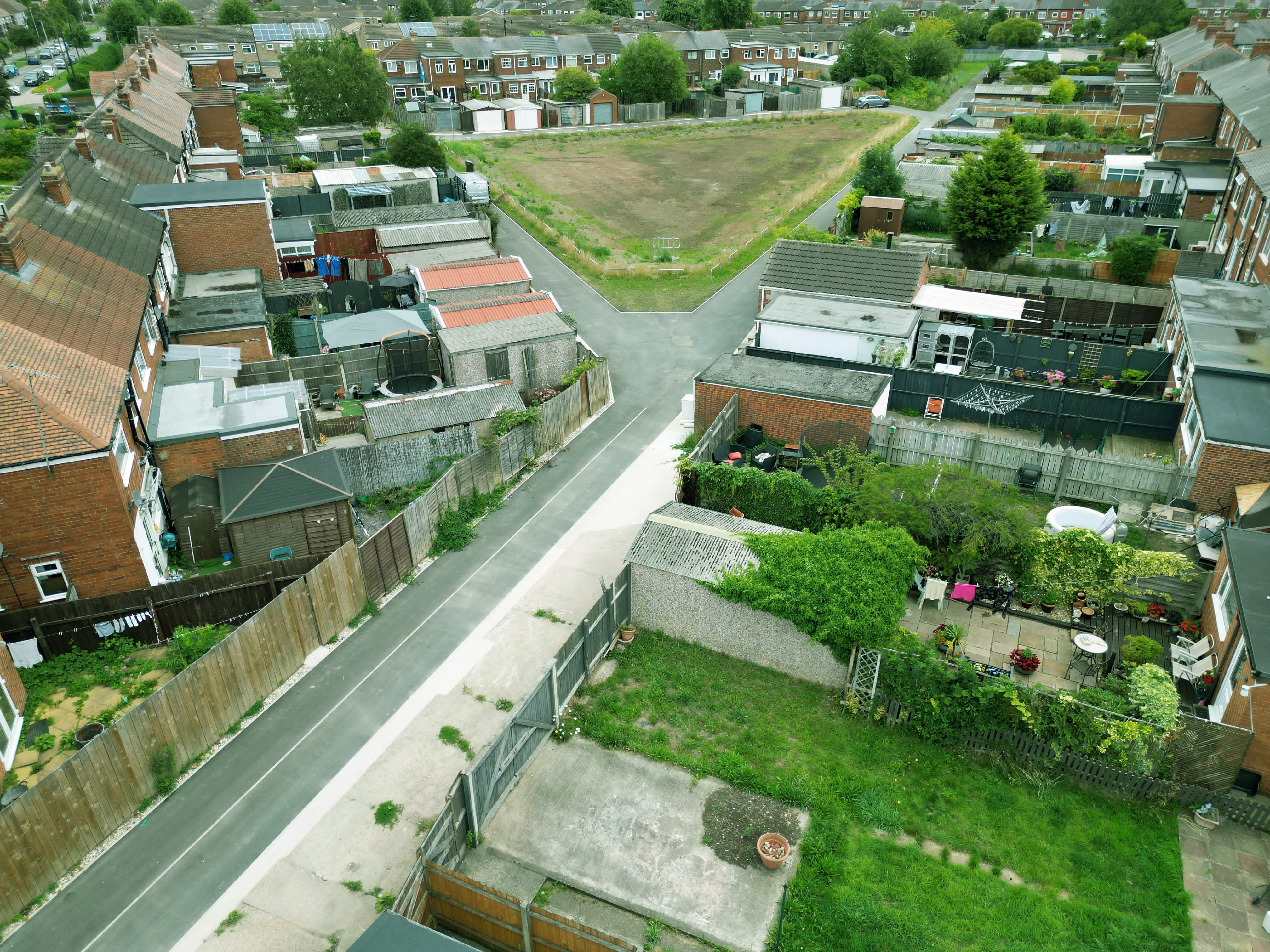
An innovative sustainable drainage system (SuDS) is providing natural flood protection and increasing biodiversity in Derringham, Hull. Hit by major floods in 2007, we constructed six new aqua greens that temporarily store excess water during heavy rainfall. Once exceedance of the drainage network has subsided, the water slowly flows back to the network via a new gravity-fed return sewer.
Replicating this storage using traditional infrastructure would have resulted in significantly higher embedded carbon, been unachievable within the constrained site, and required a mechanical and electrical installation with its ongoing maintenance and running costs.
Creating multiple aqua greens across two packages enabled us to drive efficiencies. Standard details were developed including a 1200mm x 750mm standard manhole product that was safer and simpler to install than ‘off the shelf’ solutions.
During phase one, we observed the aqua greens retaining water before the geosynthetic liner was installed. Subsequent permeability testing and groundwater monitoring showed the natural clay was less permeable than the proposed liner, removing the need for it entirely for phase two of the works. This saved two weeks on programme and 60 tonnes of carbon.
The scheme was delivered as part of the Living With Water partnership that aims to reduce flood risk while combining blue-green principles to deliver sustainable, low carbon solutions.
PROJECT: DERRINGHAM AQUA GREENS

A FIRST FOR CRT
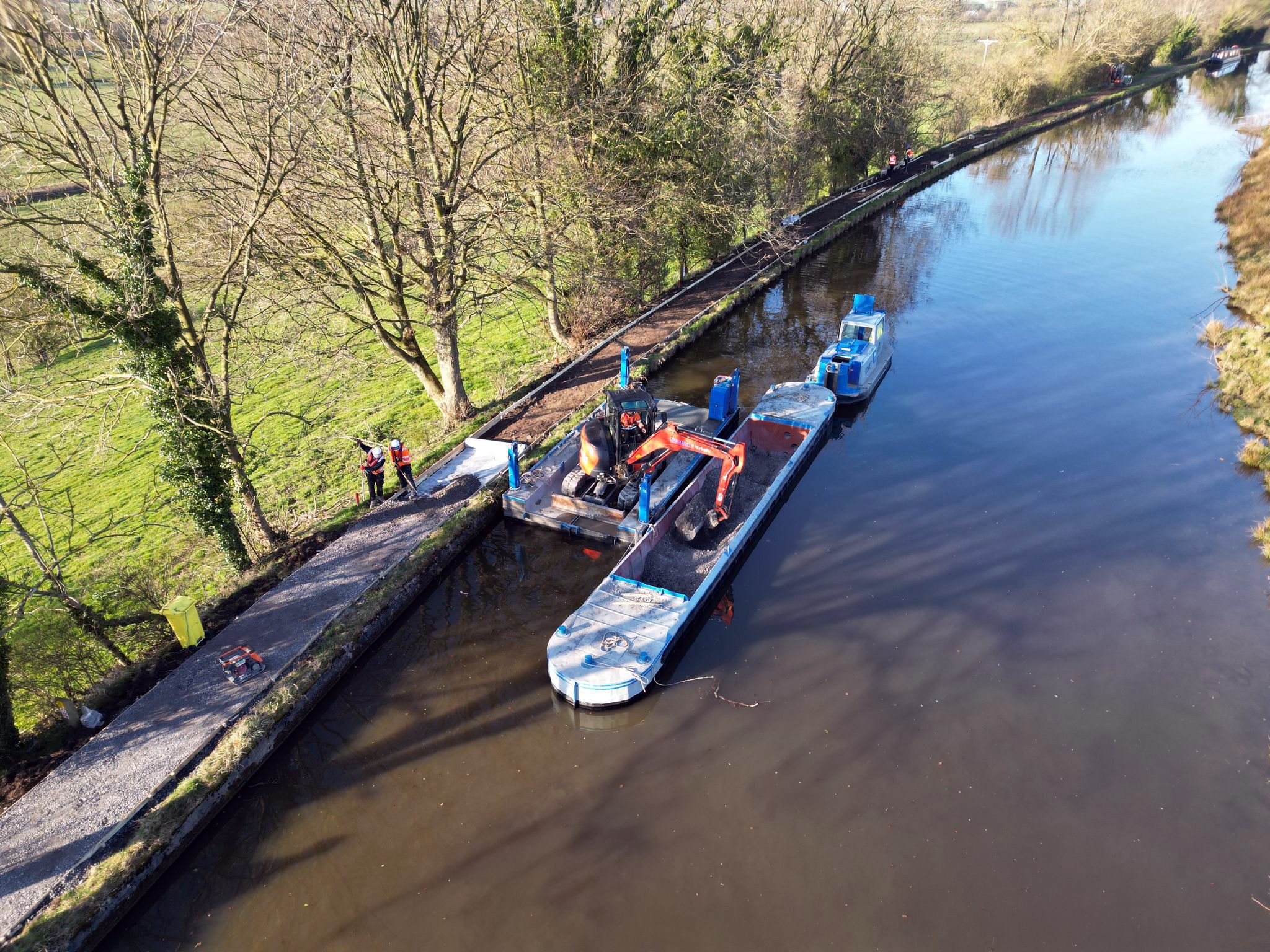
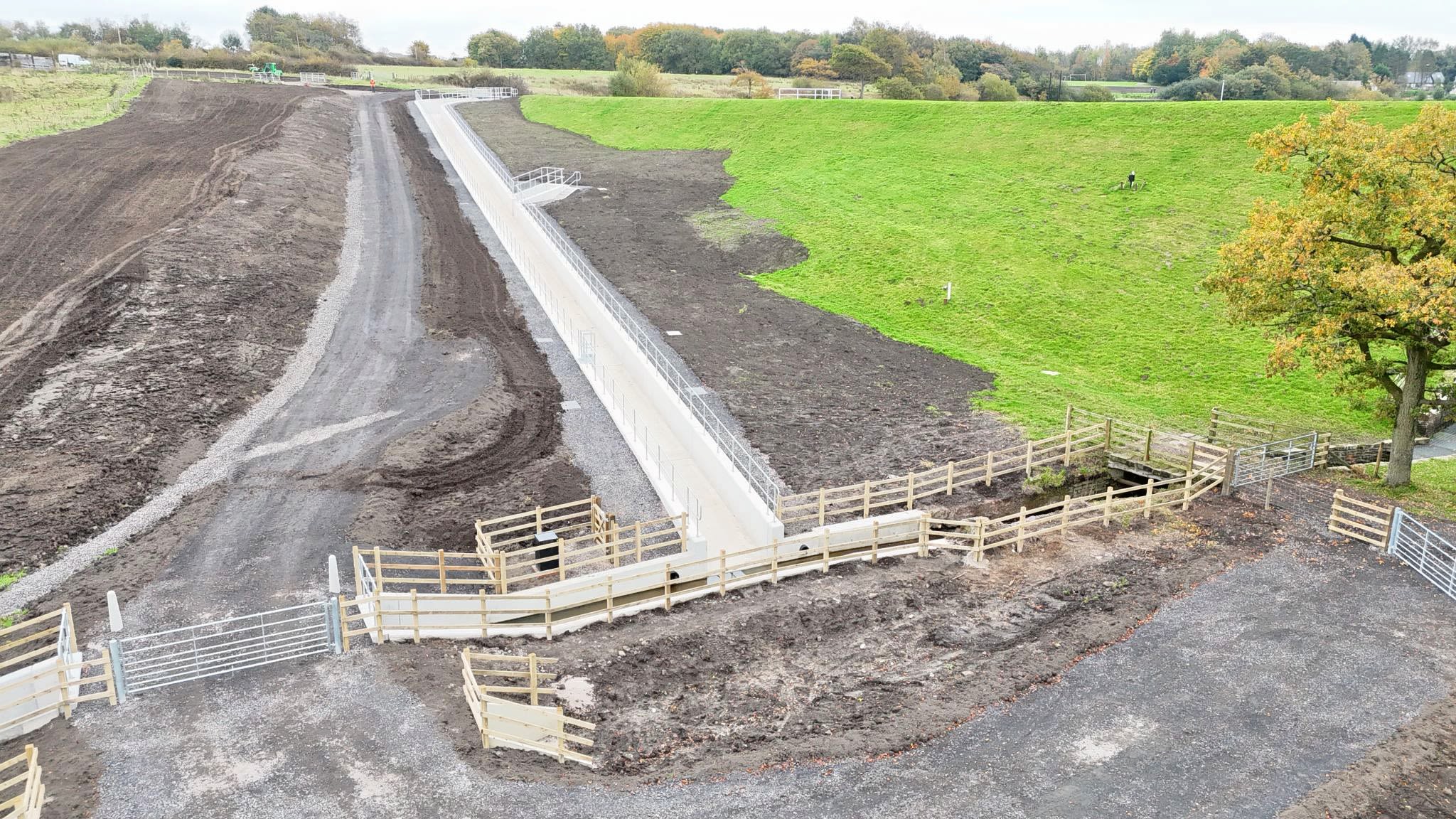
As well as managing a 2,000-mile network of canals and rivers, Canal & River Trust maintain 71 reservoirs across England and Wales. A key water supply for the Leeds & Liverpool Canal, the reservoir at Rishton in East Lancashire required a major upgrade to improve its resilience to climate change and safeguard the local community.
The project centred on a new reinforced concrete spillway capable of safely passing flows from a 1:10,000-year storm event. The wider scope also included a new access track, pedestrian footpaths, bridges, an extension to the lower draw-off pipework with new valve, and essential repairs.
The scheme showcases how our water expertise can directly benefit clients in adjacent markets, such as the environmental sector. As our very first design and build commission for the Trust, we brought experience from delivering scores of spillways with the likes of Yorkshire Water to execute the project under budget and ahead of a critical measures in the interests of safety (MIOS) deadline.
With design and construction fully integrated in‑house, the team achieved enhanced coordination, faster decision‑making, and seamless collaboration between site and design teams. Dedicated on‑site design resource ensured issues were resolved quickly and that design intent was consistently realised on the ground.
PROJECT: RISHTON RESERVOIR

ENVIRONMENTAL PROTECTION
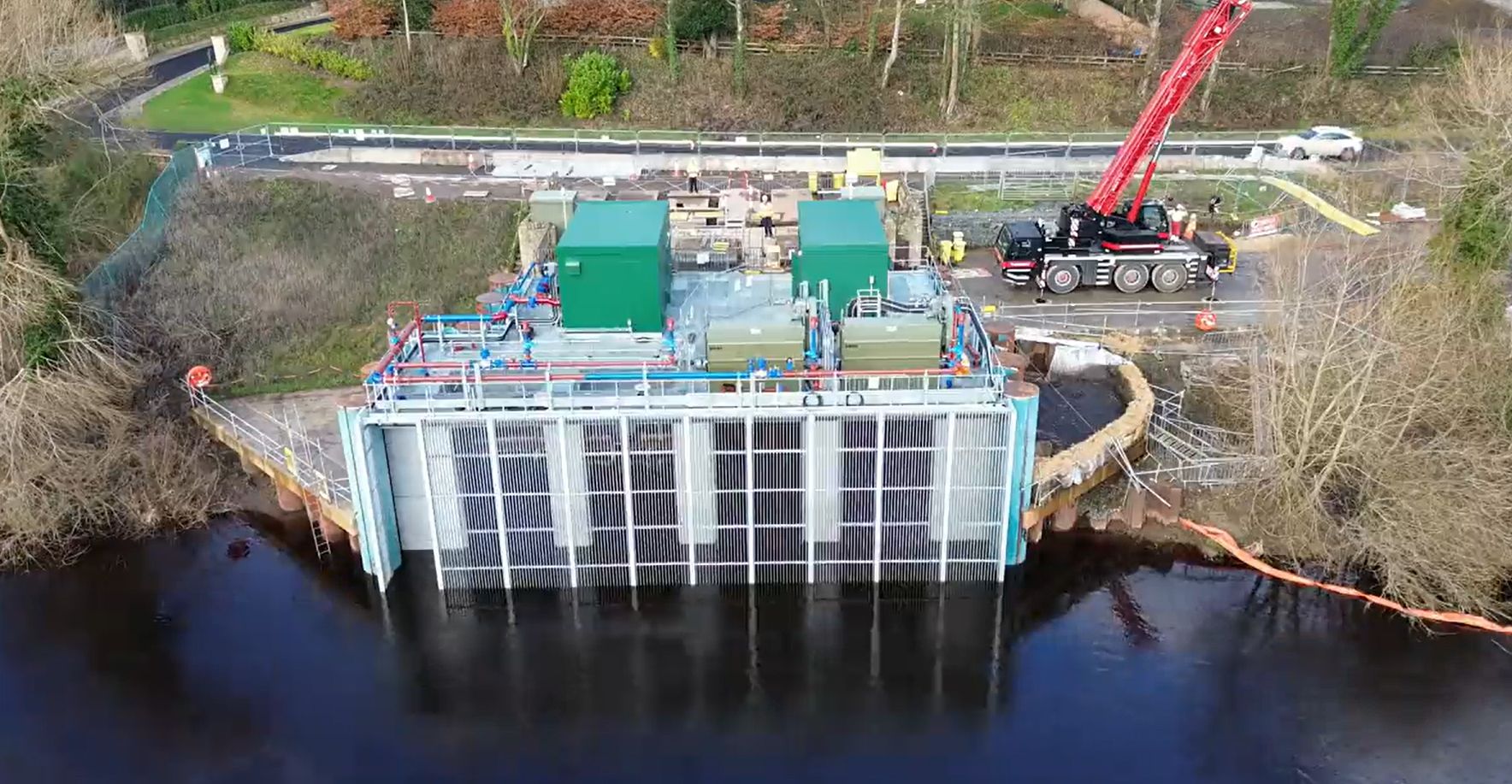
With European eel stocks at an all-time low, new regulations require water companies to upgrade assets to support their recovery. At Ovingham Raw Water Pumping Station on the River Tyne, we delivered our sixth eel screen installation for Northumbrian Water - protecting fish while maintaining vital raw water supply to nearby water treatment works.
Operational since 1971, the site’s existing screening bays could not be adapted to meet modern eel‑protection standards without major structural modification. This would have required an extended site shutdown, or the abandonment of the asset altogether. Instead, we developed a viable solution that reused much of the existing infrastructure. The design centred on the installation of four environmental fish exclusion (EFE) eel compliant screens, positioned within the river’s natural flushing flow.
The constrained site and technical complexity made early specialist involvement essential. We engaged a marine piling contractor to install 19 piles using a 500‑tonne crawler crane, with each track weighing 30 tonnes alone. Because the crane operated adjacent to the pumping station, we engaged with structural and geotechnical specialists within both MMB and the wider Mott MacDonald Group to verify that the crane pad and underlying ground could safely support the load.
Upon completion in 2026, our client will have a resilient, future‑proofed asset that complies with modern-day environmental legislation whilst maintaining an uninterrupted water supply.
PROJECT: OVINGHAM EEL SCREENS

NATURE-BASED SOLUTION
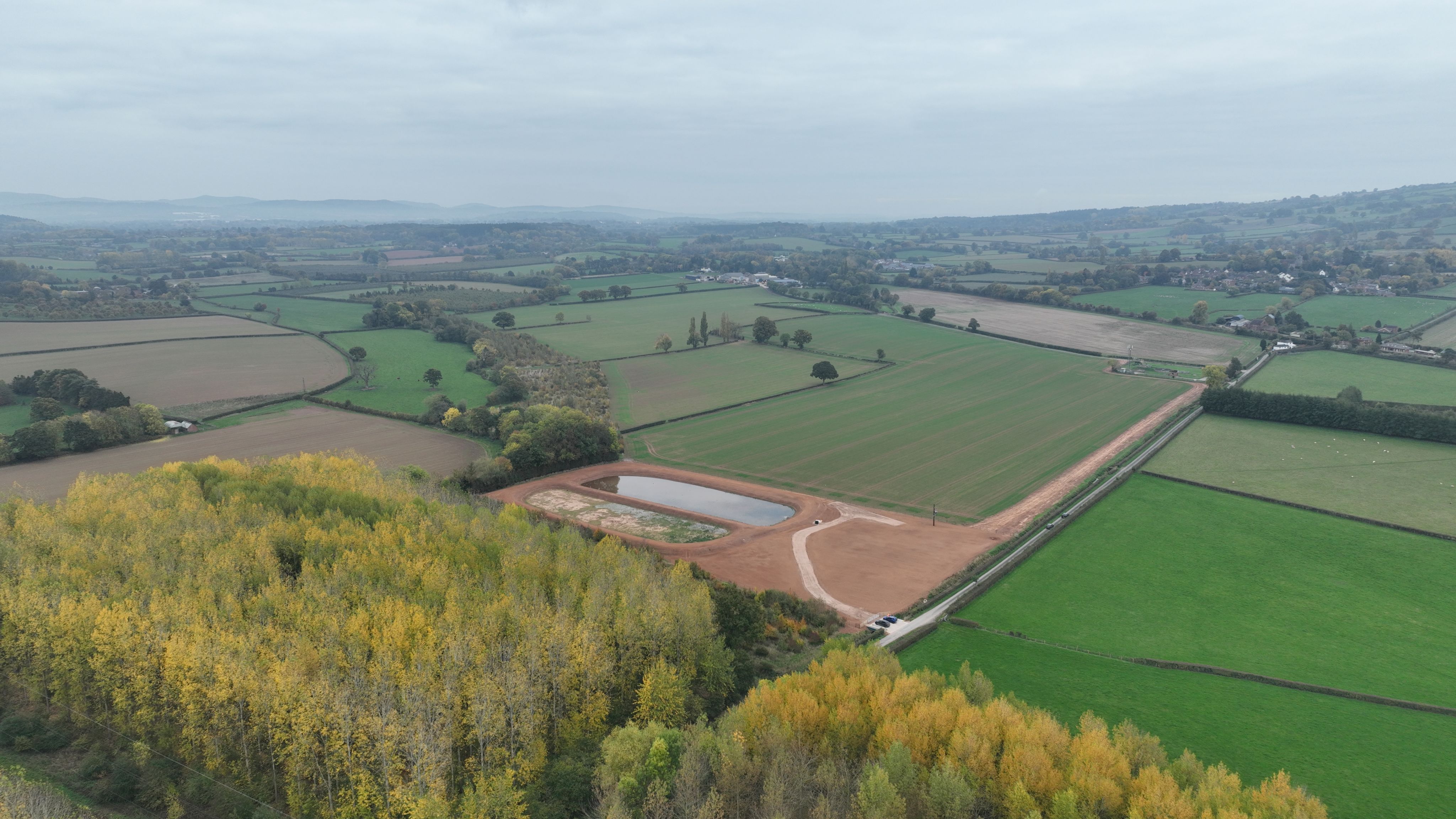
To allow residential developments to proceed without increasing overall phosphorous levels in watercourses, we delivered a nature-based treatment solution at Tarrington Sewage Treatment Works. The scheme introduced a two-cell integrated constructed wetland, a new outfall, associated pipework and a new pumping station.
Using our experience of successfully delivering this local authority client’s first, award-winning wetland scheme at Luston – and from many reed bed projects with the Mining Remediation Authority – we drove improvements, such as enhancing the outline design to improve effluent distribution and optimise phosphorus removal while maintaining safe access for long term maintenance.
Managing earthworks was a key challenge. Focused ground investigation confirmed that site-won clay would be suitable for the 300mm thick puddle clay liner for the base and sides of the new wetland cells. Our 3D model enabled further optimisation of cut and fill quantities – an approach that avoided the need for 4,000T of material being removed from site
PROJECT: TARRINGTON WETLANDS
 Built with Shorthand